Before we talk about housing instability, unemployment, financial hardship, or economic mobility, we must first acknowledge one of the most overlooked barriers to long-term stability: food insecurity.
Food insecurity is rarely visible.
It does not always look like an empty refrigerator or someone waiting in line at a food pantry. More often, it looks like a parent quietly skipping meals so their child can eat. It looks like a senior stretching groceries across an entire week. It looks like a college student choosing between textbooks and dinner, or a working adult convincing themselves that hunger is simply another sacrifice they have to make. It often exists behind closed doors, hidden beneath pride, resilience, and the desire not to become “one more burden.”
At The Providence Foundation, we have spent more than 29 years walking alongside individuals and families navigating housing instability, financial hardship, and economic uncertainty. Throughout those years, we have learned that food insecurity is not simply another challenge our clients face; it is often the foundation beneath many of the struggles they are trying to overcome.
You cannot focus on a job interview when you are hungry.
You cannot fully engage in school when your body is undernourished.
You cannot think strategically about your finances when your next meal is uncertain.
Food is not simply nutrition. It is fuel for learning, working, healing, parenting, decision-making, and hope.
Across the United States, nearly 47 million people, including 14 million children, experience food insecurity. California continues to face some of the nation’s highest rates of hunger despite being one of the world’s largest economies, and thousands of families throughout San Francisco struggle to consistently access nutritious food. These numbers are more than statistics. They represent our neighbors, our coworkers, our elders, our children, and the families living just down the street.
The effects reach far beyond an empty stomach. Hunger contributes to fatigue, anxiety, depression, chronic stress, irritability, weakened immune systems, poor concentration, impaired decision-making, worsening chronic health conditions, and lower academic and workplace performance. Hunger quietly undermines every system designed to help people succeed.
Recognizing food insecurity, however, is only the beginning.
For decades, communities have responded by referring people to food banks, pantries, and soup kitchens. These organizations provide an essential service, and their work deserves tremendous appreciation. But referrals alone cannot solve the problem.
Receiving one meal does not remove the uncertainty surrounding the next.
Too often, we unintentionally require people to navigate an exhausting maze just to meet one of life’s most basic human needs. Eligibility requirements, referrals, transportation barriers, documentation, limited operating hours, and complicated processes become yet another obstacle for families already balancing employment, childcare, housing instability, or health challenges.
We began asking ourselves a different question.
What if food wasn’t another destination someone had to reach?
What if food met people where they already are?
That question transformed our approach.
Through our partnership with ExtraFood, The Providence Foundation receives consistent weekly deliveries of fresh, nutritious food from a network of grocery stores, distributors, and food suppliers. Together, these partners help provide more than 200 pounds of food each week for our community.
More importantly, they provide consistency.
When scarcity becomes part of everyday life, consistency creates stability.
Our offices are intentionally located within neighborhoods where housing instability and economic hardship are most deeply felt. Every day, community members walk through our doors carrying needs that may never appear on an intake form. Sometimes someone directly asks whether we have food available. More often, the need is communicated in quieter ways, a parent mentioning they haven’t been able to grocery shop, a senior wondering if any leftovers remain after a community gathering, or someone lingering just a little longer, hoping there might be something to take home.
Instead of directing people to another location, another organization, or another line to stand in, we decided to bring food closer to the people already seeking support.
That simple shift changed everything.
Food insecurity does not belong to our programs alone.
It belongs to the mothers, fathers, elders, children and neighbors across our community and Providence stands with all of them.
Food insecurity does not belong only to those enrolled in our programs.
It belongs to the broader community.
Families who have never sought social services are feeling the weight of rising grocery prices. Seniors living on fixed incomes are stretching every dollar. Working families are making impossible choices every month between rent, utilities, childcare, medication, and food.
That reality inspired us to expand our reach.
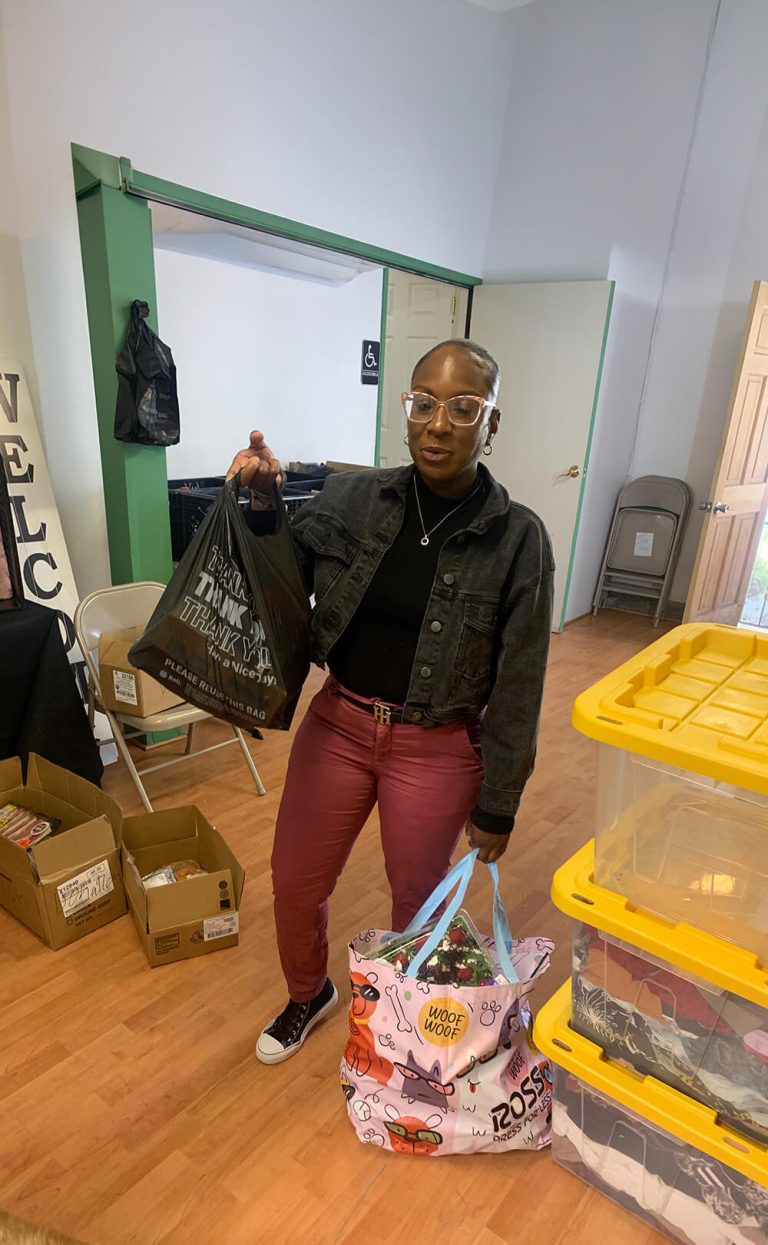
Together with the Providence Baptist Church Food Ministry, we have opened greater access to fresh food for the entire community!. During community moments of service like the Providence Boutique, our commercial refrigerator became more than a storage unit—it became a symbol of dignity, welcome, and shared responsibility. Families were invited to take what they needed without lengthy applications, complicated eligibility requirements, or unnecessary barriers.
Because access should never come at the expense of dignity.
This additional partnership with ExtraFood has taught us something profound.
Food is not charity.
Food is infrastructure.
Just as communities invest in roads, schools, public transportation, and healthcare because they make every other system function, we must also invest in reliable access to nutritious food. Without it, every effort to improve education, employment, housing, public health, and economic mobility becomes significantly more difficult.
Food is foundational.
Yet perhaps the greatest lesson has also been the hardest.
Our refrigerator empties almost as quickly as it is filled.
Every delivery reminds us that the need is far greater than we imagined. Fresh produce, proteins, dairy products, and pantry staples disappear quickly not because of waste, but because families genuinely need them. Every empty shelf tells the same story: hunger is present in our community every single day.
As heartbreaking as that reality is, it has also strengthened our resolve.
No community should accept hunger as normal.
No parent should wonder how to feed their children after working a full day.
No senior should have to choose between medication and groceries.
No child should carry the burden of hunger into a classroom.
While it is difficult to confront a problem as widespread and deeply rooted as food insecurity, we are equally grateful that we have the opportunity and the responsibility to respond. Every meal distributed represents more than food. It represents relief. It represents dignity. It represents one less impossible decision a family has to make that day.
ExtraFood has shown us what becomes possible when businesses, nonprofit organizations, faith communities, and neighbors choose to work together. This partnership on behalf of the community has helped us transform rescued food into restored hope.
But hope requires partnership.
The demand continues to grow and meeting that demand will require more than one organization can accomplish alone.
If food is truly the infrastructure that allows people to learn, work, heal, and thrive, then investing in food security is an investment in the health of our entire community.
Whether you are an individual donor, a business, a philanthropic partner, or someone simply looking for a meaningful way to make a difference, we invite you to become part of this work. Your support helps us expand food distribution, strengthen partnerships, increase access, and ensure that fewer families experience the uncertainty of an empty table.
Because hunger is not someone else’s problem.
It is a community problem.
And together, it is a community solution.
When we invest in food, we are investing in children who can concentrate in school, seniors who can age with dignity, parents who can provide for their families, and neighborhoods that have the resources to flourish.
Together, we can build a future where access to nutritious food is not considered an act of charity, but a promise we make to one another, a promise that NO ONE in our community will have to face hunger alone!