

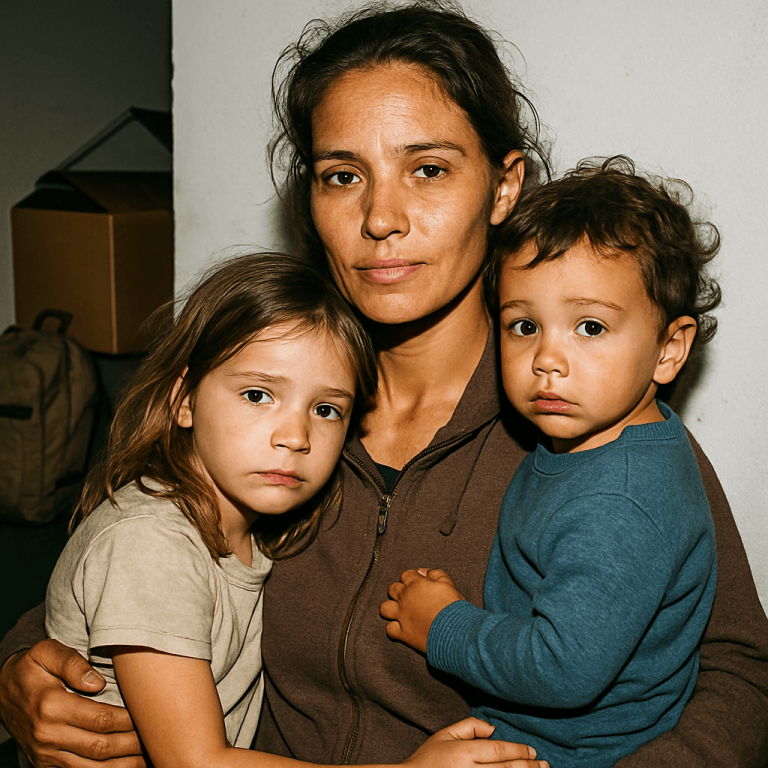
Homelessness is not a distant crisis. It is a reality touching people we know at work, in our churches, and in our neighborhoods. It is mothers, fathers, children, and elders. It is families like Jerrica’s. Her journey reminds us that the pathways into homelessness are many, complex, and deeply human.
Jerrica was married, raising her children, and doing her best to provide stability. But when her husband’s behavior changed dramatically, she was forced to flee with nothing but the clothes on her back. One of her children lives with multiple disabilities, and without income or support, Jerrica faced impossible choices. Vulnerability opened the door to further abuse, and survival led her to substance use while living out of her car.
This is not the story the media often tells. Too often, homelessness is depicted as only men on sidewalks or tents in encampments. Yet, families make up nearly 30% of the U.S. homeless population, and in 2024, over 171,000 people in families with children experienced homelessness. These are not strangers. They are coworkers, fellow congregants, and parents of classmates. The National Alliance to End Homelessness reports that homelessness rose 18% between 2023 and 2024, driven largely by the affordability crisis. More than half of Americans live paycheck to paycheck, one crisis away from losing housing.
Jerrica’s turning point came when she walked into Bayview Access Point. Shelter placement was difficult. Yet, through detoxing, managing mental health, and parenting simultaneously, Jerrica persisted. When transferred to the Oasis Family Shelter, she met staff who embodied the Providence Way: dignity-centered care, accountability, and walking with families, not ahead of them.
Case Manager Supervisor, Estella Ortiz, recognized her shifting needs and recommended a transition to Case Manager Tiffany Tolliver. Together, Tiffany and Jerrica worked to identify barriers and build a plan. Within one week, transformation was visible. Jerrica was baptized, began therapy, joined Dress for Success, and embraced every recommendation. Within a month, she secured housing!
Her daughters found empowerment through the Providence Foundation’s Crowns and Confidence program, led by case manager, Tiffany Davis. The program encouraged them and taught them that their worth and identity are intact despite hardship. Jerrica still faces challenges, but she is no longer alone. She is supported, seen, and walking forward with resilience.
Why Jerrica’s Story Matters:
- Homelessness is not a single narrative. It is domestic violence, disability, job loss, medical bills, and broken safety nets.
- Families are disproportionately impacted. In San Francisco, thousands of children experience homelessness each year, often hidden from public view.
- We must “listen with our eyes and see with our ears.” The unhoused are not invisible; they are among us, and their stories demand dignity, not stigma.
Jerrica’s story is proof that when case managers walk with families offering compassion, accountability, and opportunity, the cycle can be broken. Her journey is not just about survival; it is about transformation. It is also a call to the world: homelessness is not who people are, it is what they are experiencing.